Agricultural Drone Adoption Accelerates in the UK as Subsidy Landscape Shifts
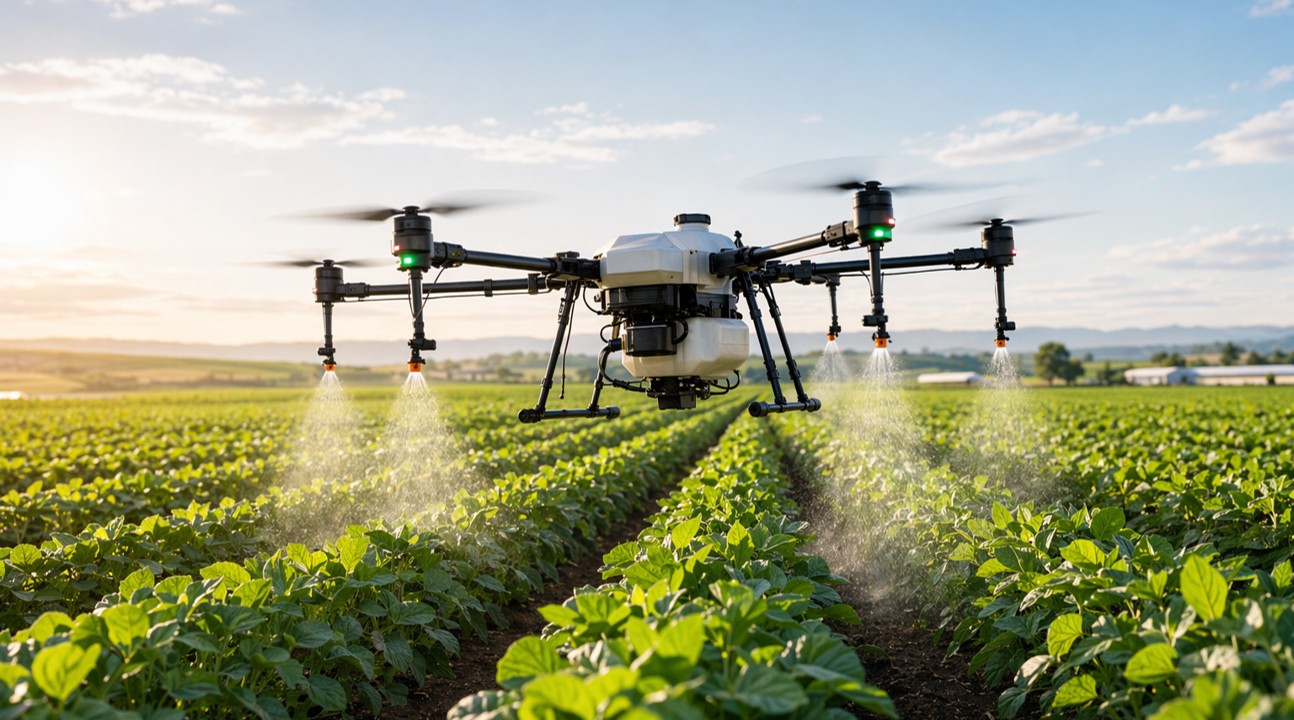
UK agricultural drone adoption is accelerating sharply, driven by a combination of falling hardware costs, an expanding range of proven use cases and a shifting subsidy landscape that is pushing farmers toward precision agriculture technologies.
Industry estimates suggest the number of UK farms actively using drones for at least one agricultural application grew by over 40% in 2025, reaching approximately 18,000 operations. The figure represents a step-change from the slow early adoption curve of the previous five years, and agricultural drone service providers are reporting record demand heading into the 2026 growing season.
The shift is being driven by several converging forces. Hardware prices for capable agricultural platforms have fallen significantly — multispectral-equipped survey drones that cost upward of £30,000 four years ago are now available for under £12,000 — while the software tools for processing drone-derived crop data have become both cheaper and considerably more user-friendly.
The Subsidy Effect
Perhaps the most significant structural driver is the ongoing transition from the EU’s Basic Payment Scheme (BPS) to England’s Environmental Land Management (ELM) system, which is rewarding farmers who can demonstrate precision, data-driven management of their land. Drones — both for crop monitoring and for targeted application — offer one of the most accessible routes to meeting the evidentiary requirements for higher-tier ELM payments.
Several ELM Sustainable Farming Incentive (SFI) actions are specifically compatible with drone-derived data, including soil mapping, hedgerow assessment and precision nutrient management planning. Farm advisors are increasingly recommending drone surveys as part of integrated SFI applications, creating a new route-to-market for survey operators who might not previously have targeted the agricultural sector.
Spraying Drones: The Regulatory Frontier
The most closely watched development in UK agricultural drones is the regulatory pathway for spraying operations. Currently, aerial application of pesticides in the UK requires a specific exemption from the Health and Safety Executive (HSE) under the Plant Protection Products regulations, a process that has historically been slow and limited in scope.
However, following consultation in late 2025, the HSE and Defra are understood to be developing a streamlined approval route specifically for drone spraying, potentially modelled on approaches adopted in Japan and South Korea where agricultural spraying drones have been operating commercially for over a decade. A framework is expected to be published for consultation in mid-2026.
Challenges: Weather, Connectivity and Skills
Agricultural drone operations face some sector-specific challenges that differ from other commercial applications. The UK’s highly variable weather creates compressed operational windows — a week of rain before harvest can mean entire seasons of survey data becomes irrelevant before it can be acted upon. Operators working in agriculture need to be responsive and flexible in a way that other inspection-focused businesses do not.
Rural connectivity also remains a limiting factor. Many farms in the UK lack reliable mobile data coverage, which complicates real-time data upload, remote monitoring and the use of cloud-based flight planning tools. Several operators have developed offline-capable workflows specifically for rural agricultural use cases.
Despite these challenges, the consensus across the agricultural drone sector heading into 2026 is optimistic. The combination of a supportive subsidy environment, falling equipment costs and a farming community that is increasingly open to precision technology is creating a genuine market inflection point — and commercial UAV operators who move quickly to serve it are likely to find it a rewarding one.
Agriculture is a growing theme at drone expos worldwide. Browse events near you in our Global Expo Calendar.
View the Expo Calendar →