Drone Inspection Market Set to Double by 2028 as Energy and Infrastructure Sectors Scale Up
The commercial drone inspection market is on course to double in value over the next two years, driven by accelerating adoption across energy, utilities, telecoms and transport infrastructure — sectors where the safety and cost case for UAV inspection is now firmly established.
New market analysis from the Commercial UAV Alliance estimates the global drone inspection sector was worth approximately $8.4 billion in 2025, with compound annual growth projected at 21% through to 2028. The UK alone accounts for over £600 million of that market, with significant concentrations in offshore wind, power transmission, rail and highways.
The figures reflect a fundamental shift that has been building for several years: drone inspection is no longer a niche or experimental proposition in these sectors — it is becoming the default method for asset inspection, with traditional rope access and scaffold-based approaches increasingly reserved for maintenance and remediation work that requires physical intervention.
Energy Leads the Way
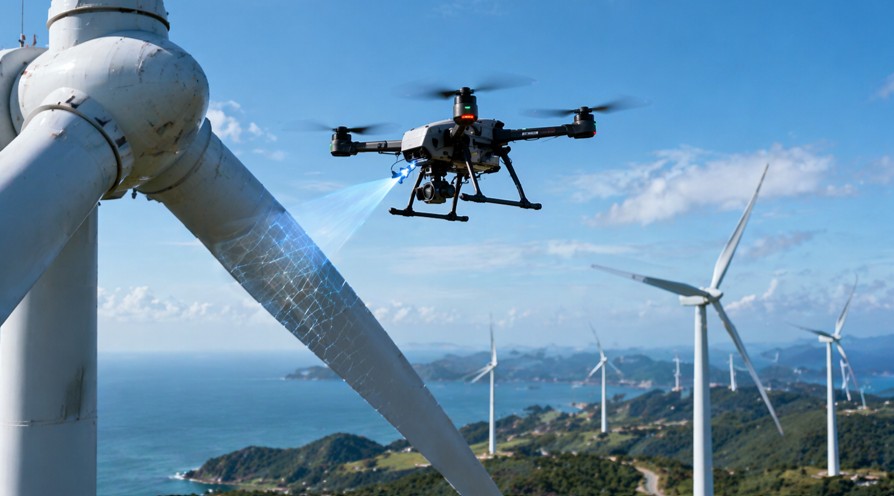
The energy sector — particularly offshore wind — remains the single largest driver of drone inspection growth in the UK and Northern Europe. With the UK now operating more than 14GW of installed offshore wind capacity and a further 30GW+ in the development pipeline, the scale of routine blade inspection, tower examination and cable monitoring work is enormous.
Major operators including Cyberhawk, Sulzer and RSK Group have all reported significant contract wins in the offshore wind segment over the past 12 months, with multi-year framework agreements becoming the norm as wind farm operators seek consistent service partners rather than one-off inspection providers.
The AI Integration Turning Point
What is supercharging adoption across all these sectors is the integration of AI-powered defect detection into inspection workflows. Where drone inspection once required highly skilled human analysts to review hours of video footage, machine learning models trained on labelled defect datasets are now able to automatically flag corrosion, cracking, delamination and other issues in near real-time.
This has dramatically reduced the cost-per-inspection and, crucially, improved the consistency and auditability of inspection reports. Asset owners can now receive structured data outputs — rather than raw video — that feed directly into asset management systems and maintenance planning tools.
Several software-as-a-service platforms have emerged to serve this market, including Scope AR, Percepto and UK-based Halo Flight, all of which offer end-to-end inspection workflow management integrating drone data capture with AI analysis and report generation.
Skills Gap Remains a Constraint
Despite strong demand, the inspection sector is grappling with a persistent skills shortage. The combination of domain expertise (understanding what a defect looks like on a wind turbine blade, for example) and UAV operational competency is rare, and training pipelines have struggled to keep pace with market growth.
Industry bodies including the Drone Industry Action Group (DIAG) have called for inspection-specific qualification pathways that combine airspace safety training with sector-relevant technical competencies, a model already emerging in partnership between some operators and sector trade associations.
For drone operators looking to expand into inspection services, the message from buyers is consistent: technical UAV capability is table stakes — what differentiates winning bids is depth of sector knowledge, data management capability and the ability to demonstrate tangible outcomes for asset owners.
Find drone inspection specialists and tech providers at events listed in our Global Expo Calendar.
View the Expo Calendar →